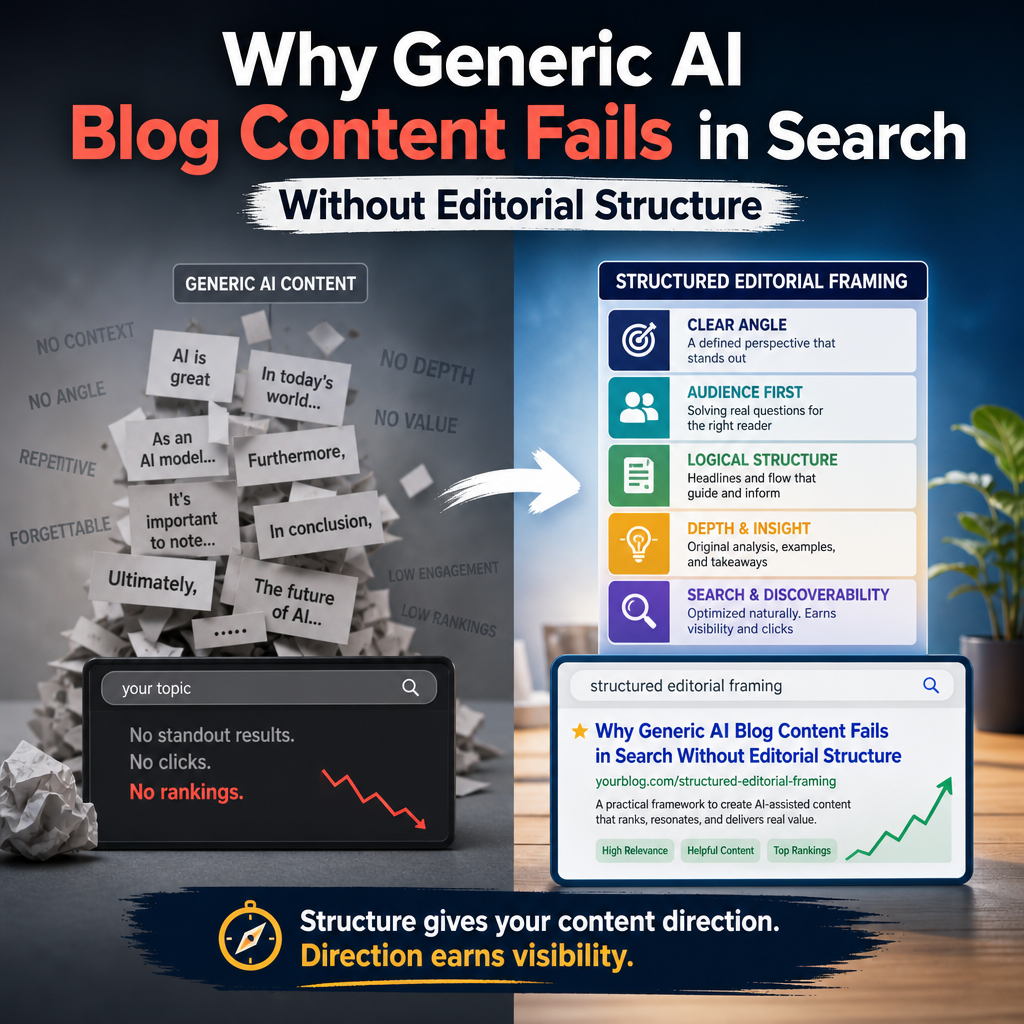
Why Generic AI Blog Content Fails in Search Without Editorial Structure
Why Generic AI Blog Blobs Fail in Search—and How Structured Editorial Framing Fixes It
A blog post can be grammatically clean, loaded with relevant terms, and still give readers no reason to choose it over ten similar results. That’s the problem with generic AI blog blobs: they cover a topic without deciding what the reader should know, do, or be able to decide by the end.
Structured editorial framing fixes that problem before the first paragraph is written. It gives the article a specific reader, a clear promise, and a sequence of sections that delivers on it. The goal isn’t to make AI writing sound more human. It’s to make the page more useful.

Why Generic AI Blog Blobs Fall Short
They Cover the Topic but Miss the Task
Someone searching for “how to fix a slow WordPress site” probably doesn’t need three paragraphs on why speed matters. They need to know where to start. A useful article might show them how to tell whether the delay comes from the server, an oversized image, or a third-party script. Those are different problems with different fixes.

A generic article often gives each subtopic equal weight. That can work for an overview, but it frustrates a reader who came to diagnose a problem or make a decision. The search term tells you the subject. The likely intent tells you what to put first.
They Repeat Advice Without Making It More Useful
“Optimize your images” is sound advice, but it leaves the reader with another question: which image should I optimize first? An annotated performance report or a worked example can answer that in a way another paragraph of explanation can’t.
Not every post needs original research. A screenshot, a comparison with clear criteria, or an example that shows when common advice doesn’t apply can give readers something they didn’t get from the other results.
Their Headings Label Topics Instead of Guiding Readers
Headings like “Benefits,” “Best Practices,” and “Common Mistakes” break up the text, but they don’t tell a skimming reader where the answer is. “Check the Largest Image Before Adding a Caching Plugin” is more useful when the section explains how to identify that image and decide whether it’s the bottleneck.
The issue isn’t that AI wrote the draft. It’s that no one made the editorial choices that give the page a purpose.
How to Use Structured Editorial Framing
Write the Reader Promise Before the Outline
Start with one sentence: “After reading this, [specific reader] will be able to [specific action or decision].”
For a post about editorial calendars, “Readers will understand content planning” is too broad to guide a draft. “A solo publisher will be able to plan four weeks of posts without committing to a schedule they can’t sustain” gives you something to work with. It tells you to include a realistic example schedule and to skip the advice about managing a team of writers.
Give Each Section a Job
Turn the reader promise into a series of questions the article needs to answer. For the editorial calendar example, the outline might look like this:
- How often can I realistically publish? Estimate how much time one post takes before choosing a frequency.
- Which topics should go first? Prioritize ideas by reader need, timeliness, and effort.
- What does a four-week calendar look like? Show a sample with time for editing and publishing, not just drafting.
- What happens when I fall behind? Explain which deadlines to move and how to reset the schedule.
Now the order matters. The reader chooses a pace before filling a calendar, and the sample shows how those decisions affect an actual month.
Edit for Answers, Not Just Readability
Once the draft is ready, compare it with the promise. Does the introduction tell readers what they’ll get? Can they find the key answer by scanning the headings? Does each example help them make a decision or take a step?
Then check the claims. If the article recommends a tool, say when it’s useful and when it’s unnecessary. If it cites a number, verify the source and context. Cut paragraphs that merely restate the heading, even if the prose sounds polished.
Better Framing Gives Readers a Reason to Choose Your Page
A clear outline won’t guarantee rankings. But it can prevent a common editorial failure: publishing a page that matches the query’s vocabulary without solving the reader’s problem.
Before publishing, read the title, headings, and examples on their own. If they show who the post is for, what it helps them do, and how to get there, the article has a reason to exist beyond covering a keyword.
