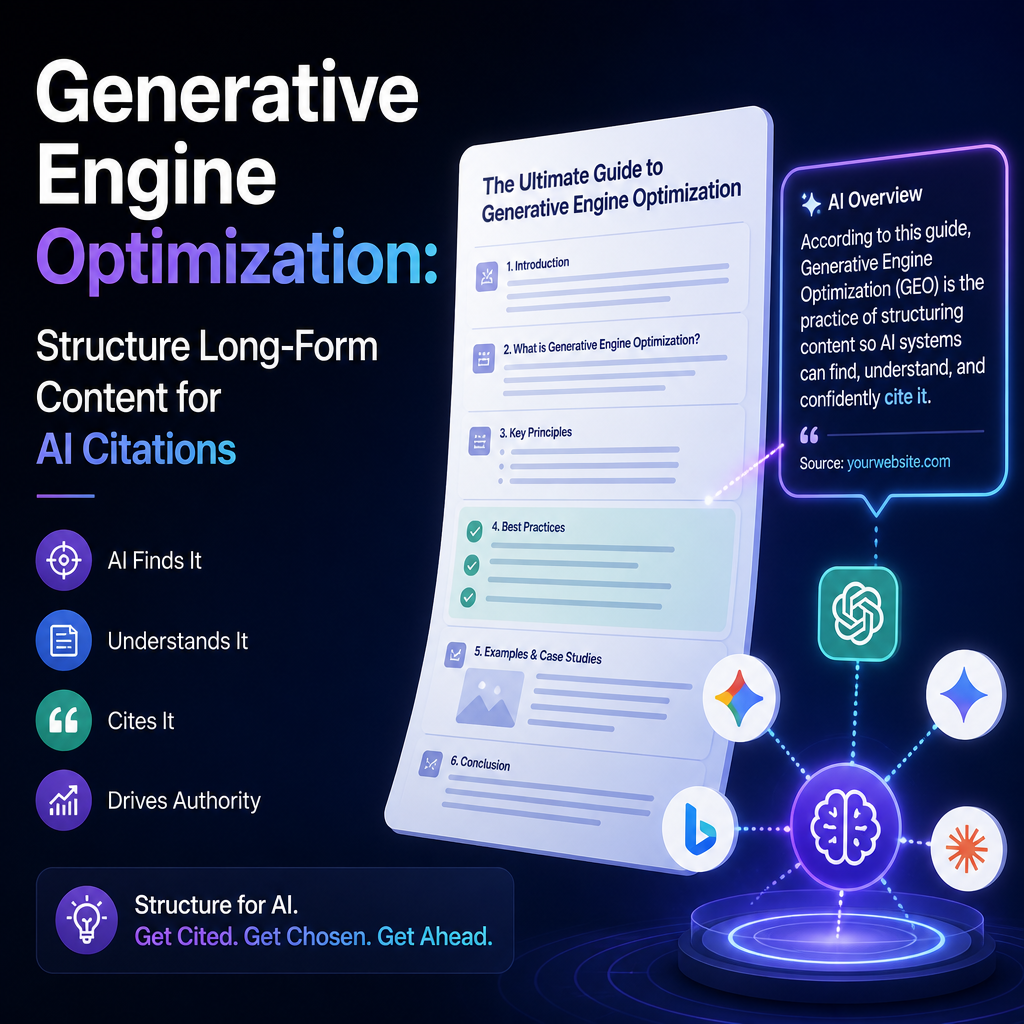
Generative Engine Optimization: Structure Long-Form Content for AI Citations
Generative Engine Optimization (GEO): How to Structure Long-Form Content So AI Models Cite You
A long-form article can answer a question well and still make the answer hard to find. If the main claim is buried in the introduction, the supporting data lives in a chart without a caption, and the caveats appear at the very end, readers have to piece the story together. AI-powered search tools face a similar problem when they retrieve only part of a page.
Generative Engine Optimization (GEO) is the practice of making content easier for generative search systems to discover, interpret, and reference. It doesn’t guarantee citations. What it can do is make your article a better source: easy to navigate, specific about what it claims, and transparent about where the evidence comes from.

Put the Main Answer Before the Background
Use the opening paragraphs to tell readers what the article answers and why it matters. If the answer depends on a condition, name it early. Then use the rest of the article to explain the reasoning, evidence, and exceptions.

For example, an article about how often to refresh evergreen content shouldn’t open with several paragraphs on the history of content marketing. Start with the decision rule: review pages more often when their facts, prices, or recommendations change frequently. Then explain how to set a review schedule and what should trigger an update between reviews.
An answer-first opening isn’t a substitute for depth. It gives readers a reason to keep going and helps them recognize which sections are relevant to their situation.
Make Each Section Useful on Its Own
Give every H2 a distinct job. A heading like “When to Update an Evergreen Article” tells readers what they’ll learn. “Key Considerations” makes them read the section just to find out what it covers.
Keep the Claim, Evidence, and Caveat Together
A passage may be retrieved without the paragraphs around it. Write each major section so its central point still makes sense out of context. Name the subject explicitly, define unfamiliar terms where they appear, and keep important limitations close to the claims they qualify.
For instance, “Completion rates rose after we shortened the form” leaves several questions unanswered. A useful account identifies the form, states the before-and-after rates and measurement period, and explains whether the result came from a controlled test or a simple comparison. If other changes happened at the same time, say so in the same section rather than in a distant footnote.
Publish Something Worth Citing
Formatting makes information easier to find. Original reporting, well-documented examples, and careful comparisons give people a reason to reference it.
If you publish original data, include the collection dates, sample size, and method. If you rely on someone else’s research, link to the primary source near the relevant claim. Separate what the evidence shows from what you infer or recommend. A precise finding with a narrow scope is more useful than a broad claim the source can’t support.
You don’t need a research budget to add something new. A clearly documented workflow, an annotated example, or a comparison that explains its criteria can give readers something they won’t find in another summary of the same topic.
Use Formatting to Clarify the Information
Choose the format that fits the material. Use numbered lists for steps that must happen in order, bullets for criteria, and tables for comparisons across consistent attributes. Give tables descriptive headers and explain the main takeaway in nearby text. If a chart contains a finding central to your argument, state that finding in the article rather than leaving it in the image alone.
Make sure the published page is accessible, too. Check for unintended indexing restrictions, broken source links, and key information hidden in images or downloads. Use descriptive internal links so readers can find supporting articles. Discoverability is a prerequisite for some forms of AI citation, not a promise that your page will be selected.
Edit for the Reader Who Arrives Mid-Article
Before publishing, pick one H2 and read it without looking at the introduction. Can you tell what question the section answers? Can you verify its most important claim? Would someone quoting the main finding also see the caveat that limits it?
That test captures the practical goal of Generative Engine Optimization: build a long-form article that works as a coherent whole, while making its strongest passages clear and trustworthy enough to stand on their own.