Entity-First Publishing: Build Topical Authority That Survives Search Algorithm Updates
Entity-First Publishing: Building Topical Authority That Survives Search Algorithm Shifts
A reader researching heat pumps might start with “Will a heat pump work in winter?” and end up comparing insulation, electricity rates, and installation quotes. Those searches look like separate keyword opportunities. To the reader, they’re all part of one decision.
Entity-first publishing builds content around the things readers need to understand and the relationships between them. Keywords still matter: they tell you how people phrase their questions. But those questions shouldn’t dictate a separate page every time the wording changes.

What Is Entity-First Publishing?
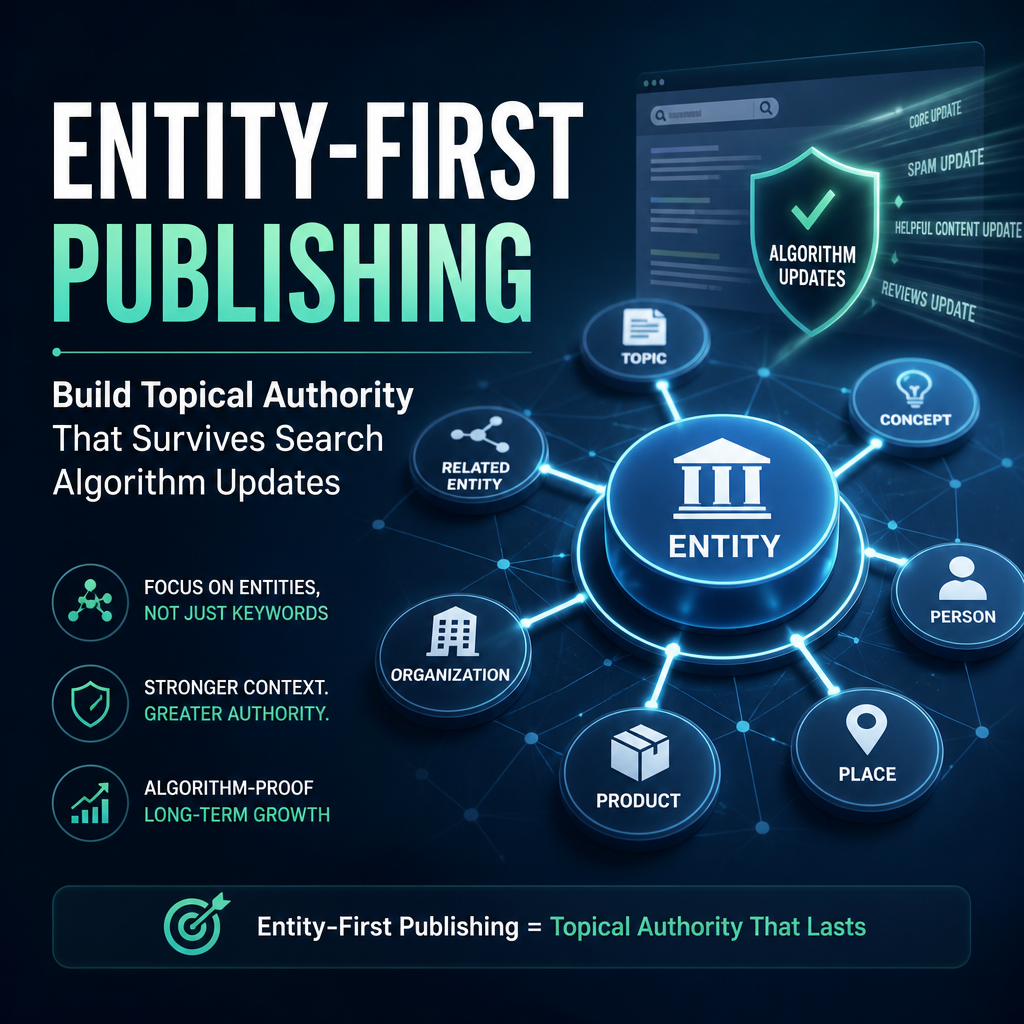
An entity is a distinct thing or concept, such as a person, organization, product, place, or technology. In a home energy publication, an air-source heat pump is an entity. So are a building’s heating load, its insulation, and the local electricity tariff.

Listing those entities isn’t enough. The useful work is explaining how they relate. Better insulation can reduce a home’s heating load, which may affect the size of the system it needs. Electricity rates help determine what that system costs to run. These connections give readers a way to apply what they learn to their own homes.
That’s the practical meaning of topical authority: readers can rely on your site for accurate answers to a connected set of questions. It isn’t a score you can raise by mentioning more related terms.
How to Build an Entity-First Content Plan
Start With a Decision, Not a List of Terms
Choose a subject that fits your publication’s expertise, then identify what readers need to decide. “Home energy” is too broad to guide assignments. “Should I replace my furnace with a heat pump?” gives an editor a much clearer brief.
Map the entities that matter to that decision. For each one, write down the question it helps answer:
- Heating load: How much heat does the home need on a cold day?
- Existing ductwork: Can the new system use what’s already installed?
- Local electricity rates: What might it cost to run compared with the current system?
- Rebates: Which incentives apply, and when do they expire?
If you can’t explain why an entity matters to the decision, leave it out. A focused map is easier to publish, navigate, and maintain than a catalog of everything related to the topic.
Give Each Page a Distinct Job
A central guide can walk readers through the replacement decision. Supporting pages should take on questions that need more room, such as how to read an installation quote or why heating load matters when sizing equipment.
Before assigning a new article, check whether an existing page could answer the question well in a few paragraphs. “Do heat pumps work below freezing?” and “Can heat pumps run in subzero weather?” may belong on the same page. A regional guide to choosing a system for a cold climate could justify a separate page if it covers different equipment, operating conditions, or costs.
Link where the next question comes up. A passage about equipment sizing is a better place to link to a heating-load explainer than a generic “Related articles” list at the bottom.
Make Important Claims Easy to Verify
Explain where numbers come from and what assumptions they depend on. A running-cost comparison is more useful when it names the electricity rate, climate, and equipment assumptions than when it promises a percentage saving with no context.
Use consistent names for products and concepts, and distinguish versions when the differences matter. Add structured data where it accurately describes the visible page, such as article authorship. It can help search systems interpret page details, but it can’t supply evidence or expertise missing from the article.
Why This Approach Holds Up Better Over Time
Entity-first publishing doesn’t guarantee stable rankings. Search systems change, competing pages improve, and some queries generate fewer clicks than they once did. What this approach gives you is a body of content worth maintaining even when those conditions change.
Review pages as a group. If a rebate expires, update the page that explains it and check any guides that summarize the offer. If two articles answer the same question, consider combining their strongest material. If readers repeatedly leave a guide for information it should have explained, fix the gap before commissioning another post.
Start with one existing topic. Pick the page that best serves the reader’s main decision, then follow its links as though you were making that decision yourself. The points where you have to stop, guess, or search elsewhere are where your next edits will do the most good.